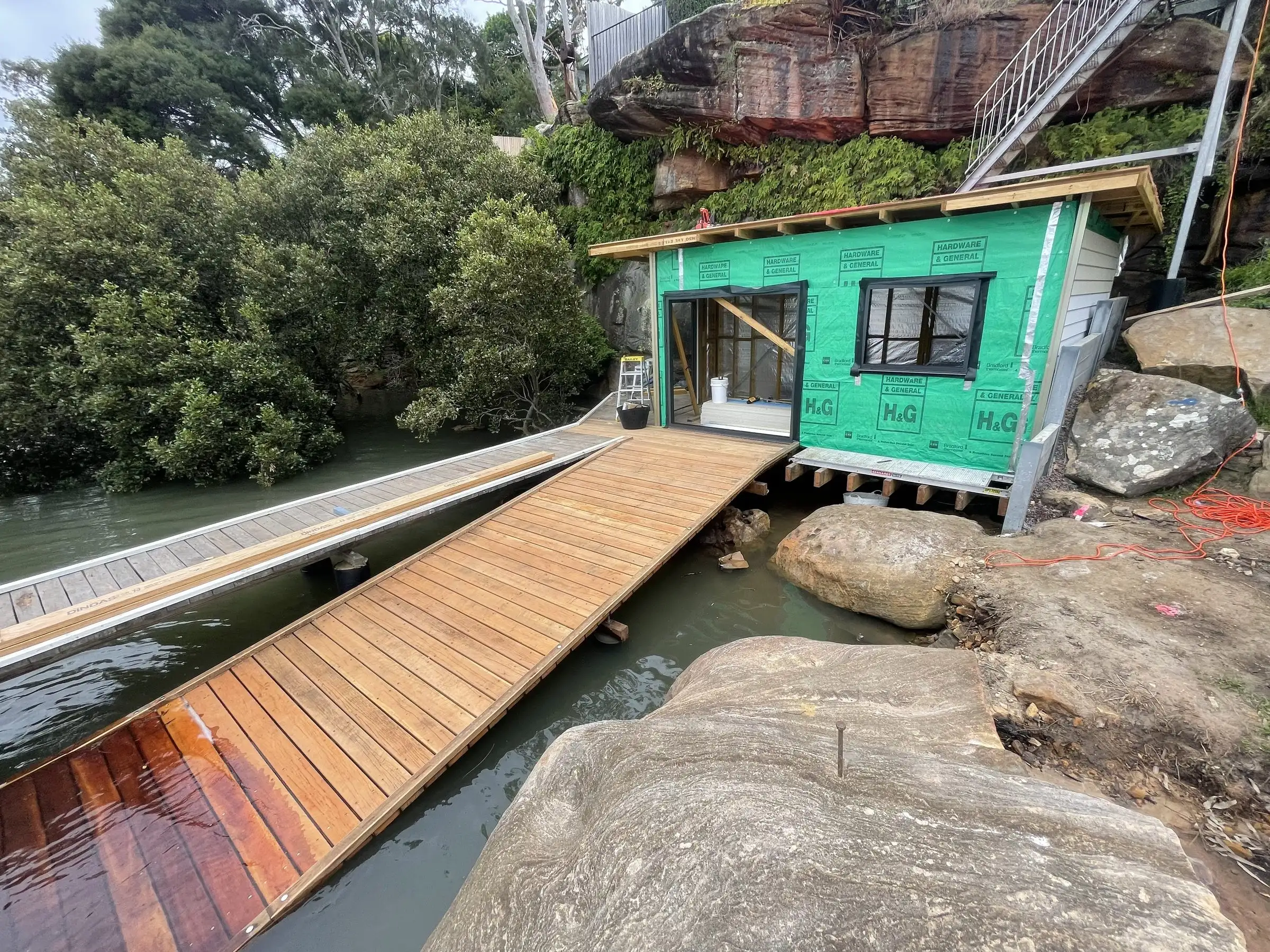
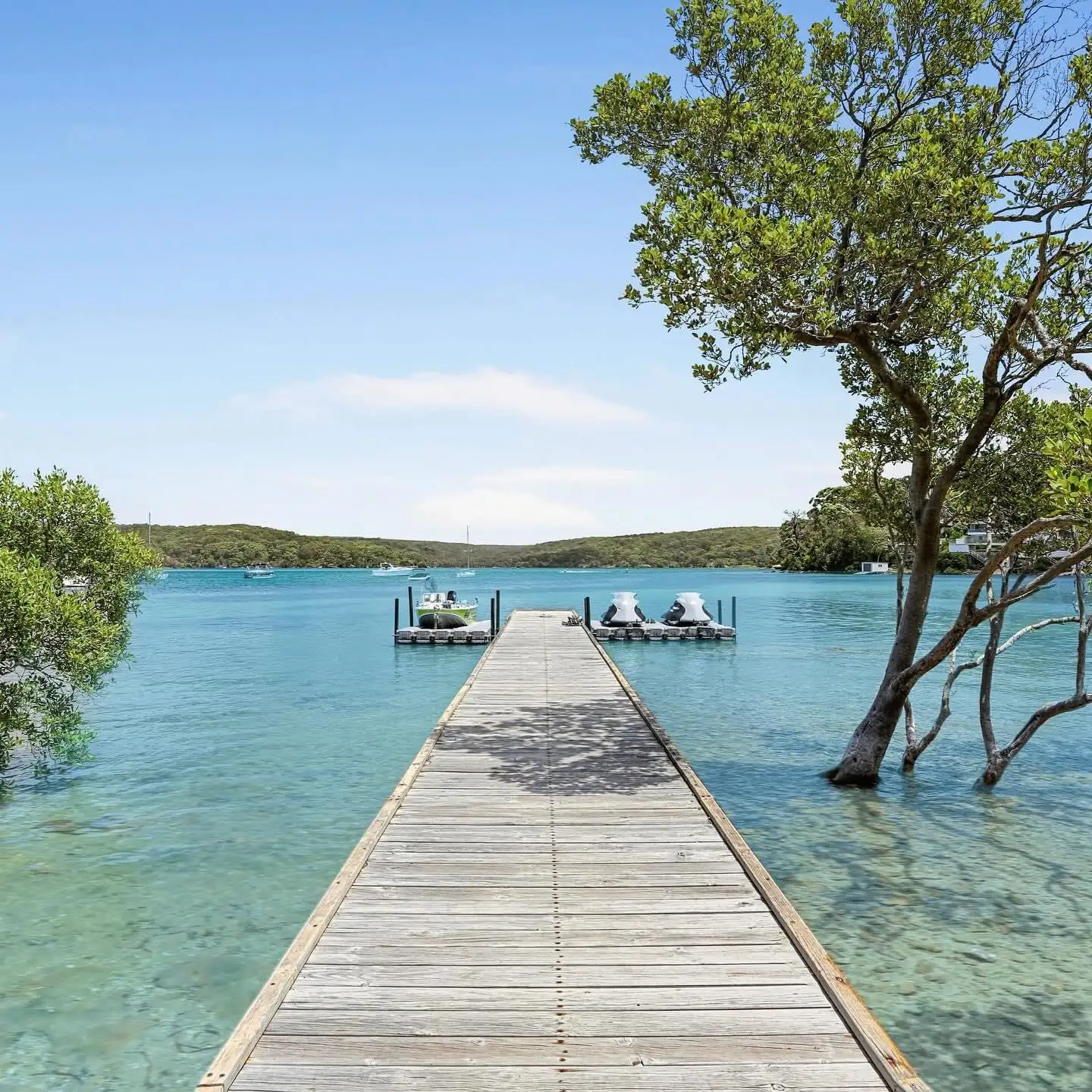
Timber jetty with white handrails built by Kingtide Marine reaching over the clear water of the Port Hacking River

Jetty & Wharf Construction in Sydney

Jetties & Wharves

Jetties and wharves are fixed structures built over the water, usually on timber, steel or concrete piles, that give safe access between land and vessels. A jetty runs out from the shore and suits private moorings, boarding, fishing and small craft. A wharf is a heavier-duty structure built along or out from the shoreline so larger vessels can berth, load and unload. We design, build and maintain both, engineered for local tides, conditions and use.

Jetties of all shapes and sizes

Every waterfront is different, and so is every jetty we build. Whether it’s a private landing for a residential property or a full-length structure for a commercial setting, we design, build and install it to suit your site, your tides and how you use the water.

A jetty takes a beating from wind, swell and salt every day of its life, so we build it to last. We use only the best seasoned Australian hardwood, which we source and install ourselves, so we know exactly what’s going into your structure.

We build timber, FRP mesh, concrete, custom and eco-friendly jetties for private and commercial clients, from first sketch to final board. We handle repairs and maintenance too. If a storm has been through or the years are starting to show, get in touch and we’ll come and take a look.
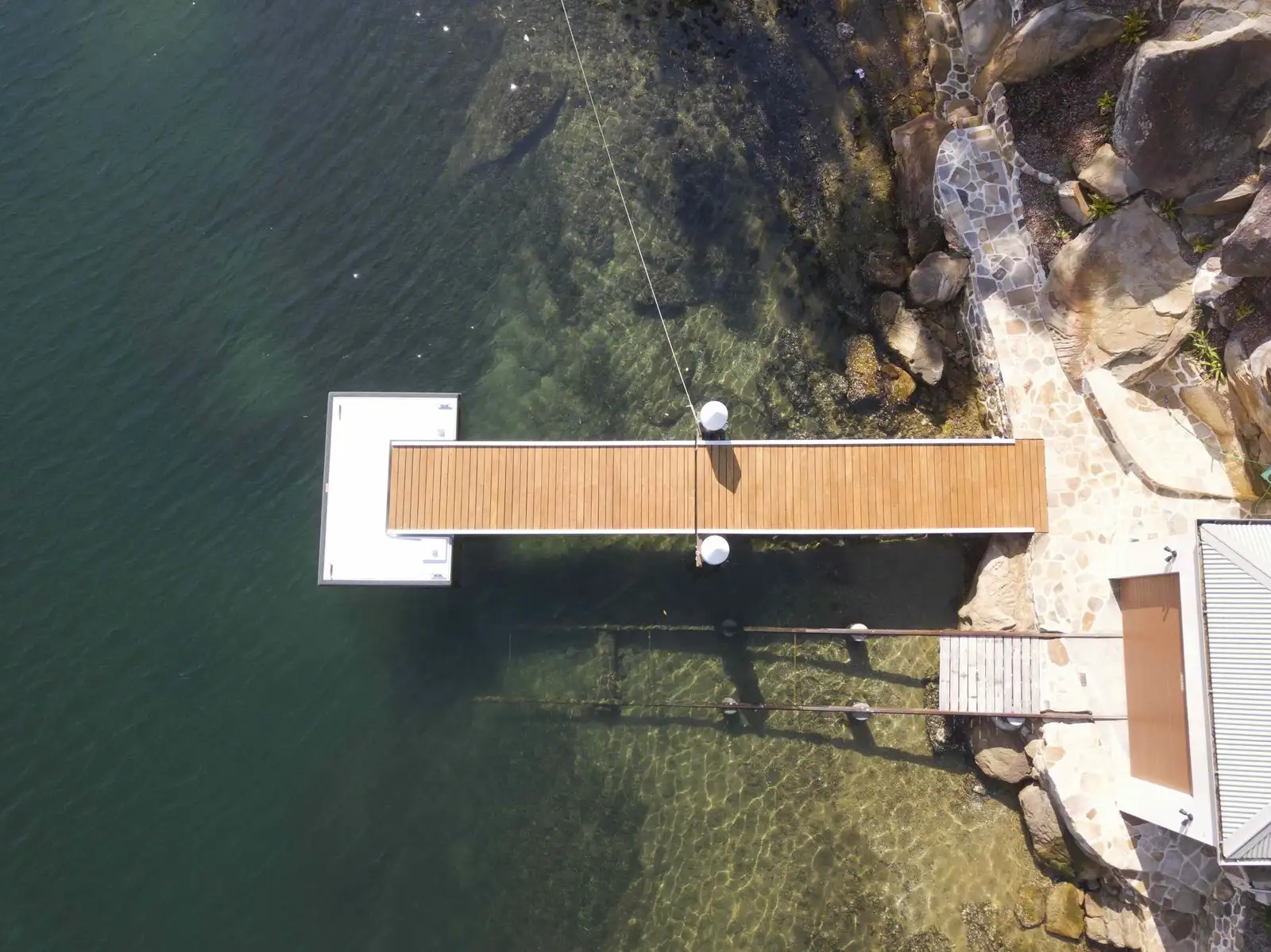
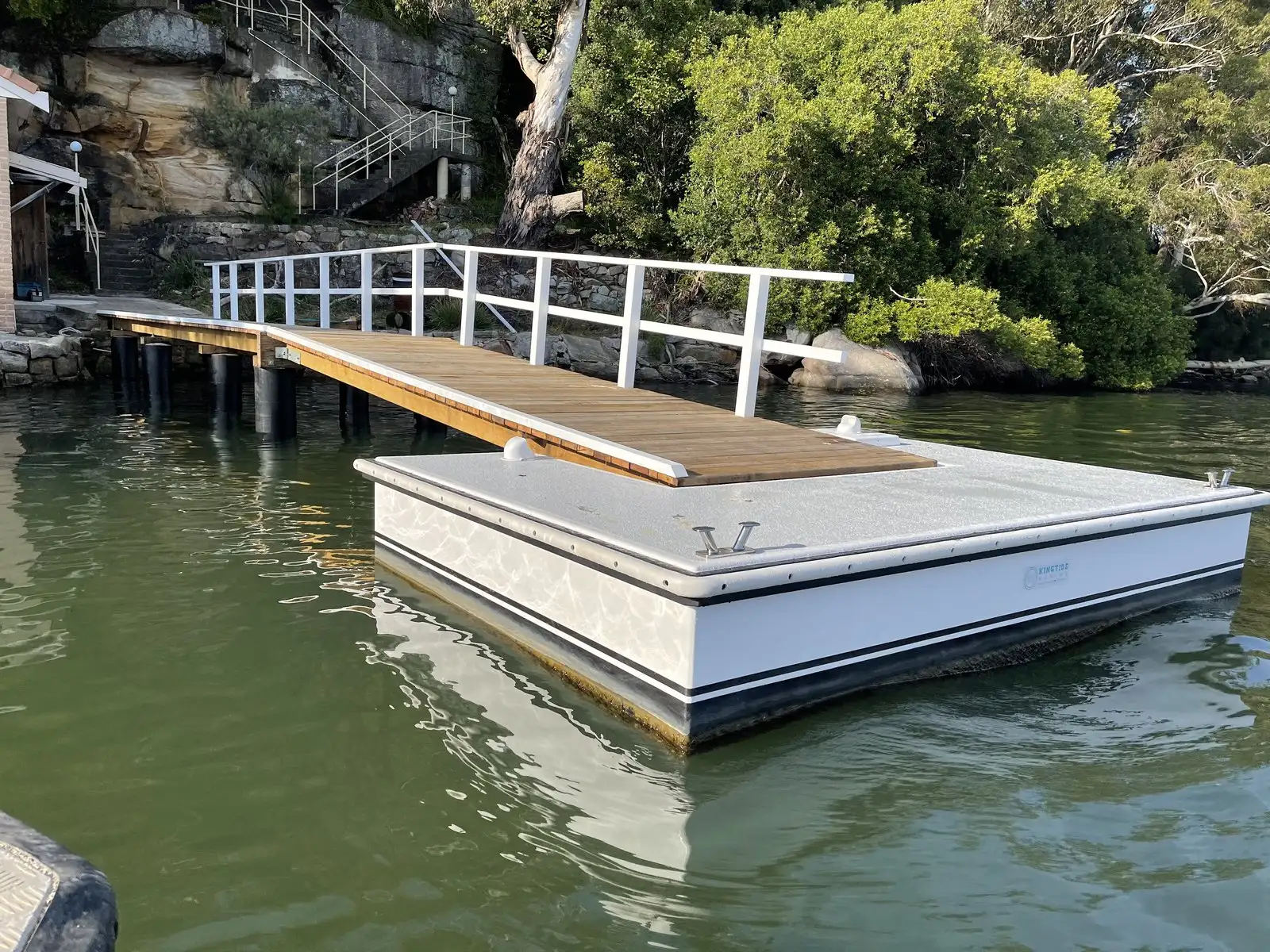
Aerial view of a Kingtide Marine jetty running out to a white pontoon beside a rocky sandstone foreshore

Jetty, ramp and pontoon

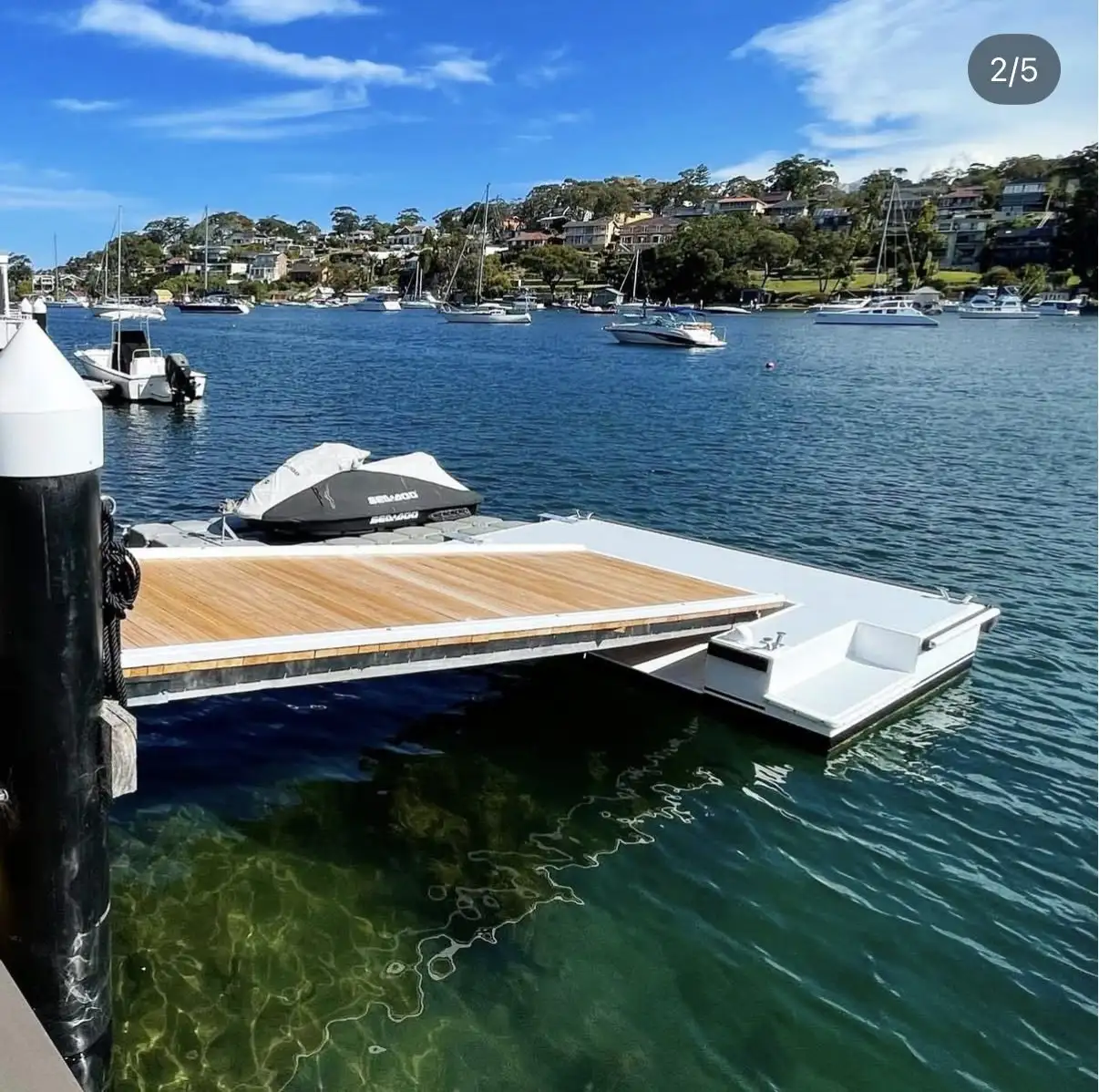
For most waterfronts, the ideal setup is a jetty out from the shore, a hinged ramp off the end and a floating pontoon at the bottom. The pontoon rises and falls with the tide, so getting on and off your boat is just as easy at low tide as at high.

Your site decides whether you can have one. A pontoon needs at least 600 mm of water at zero tide to be approved. Any shallower and it sits on the seabed at low tide and damages it. If the depth isn’t there, we’ll recommend a fixed jetty, a wharf or a skid ramp instead. We’ll confirm what suits your site at the first inspection.

Hardwood-decked floating pontoon rising with the tide beside a jetty, with a jet ski berthed alongside

How we build a timber jetty

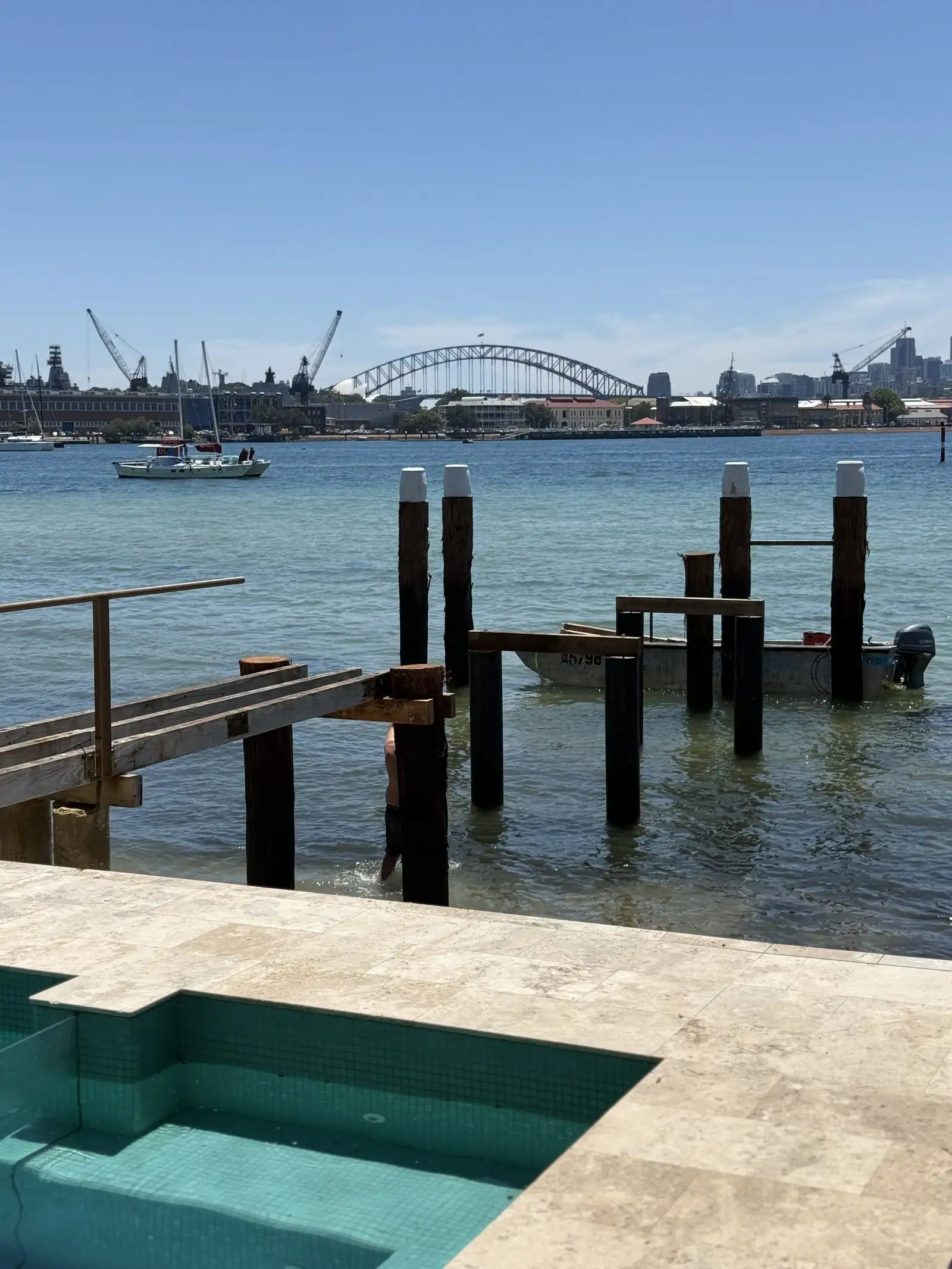
We install the piles from a floating barge fitted with an excavator and drill rig. We drill a socket into the seabed, set the pile in place, pump out the water and fill it with steel reinforcement and concrete. Everything comes in from the water, so there’s no crane on your lawn and no equipment through your house. On most waterfront blocks, that’s the only way the job can be done.

What goes into it

  • Structural HDPE piles
  • A concrete core with galvanised steel reinforcement
  • Turpentine timber piles
  • Hardwood decking and balustrade
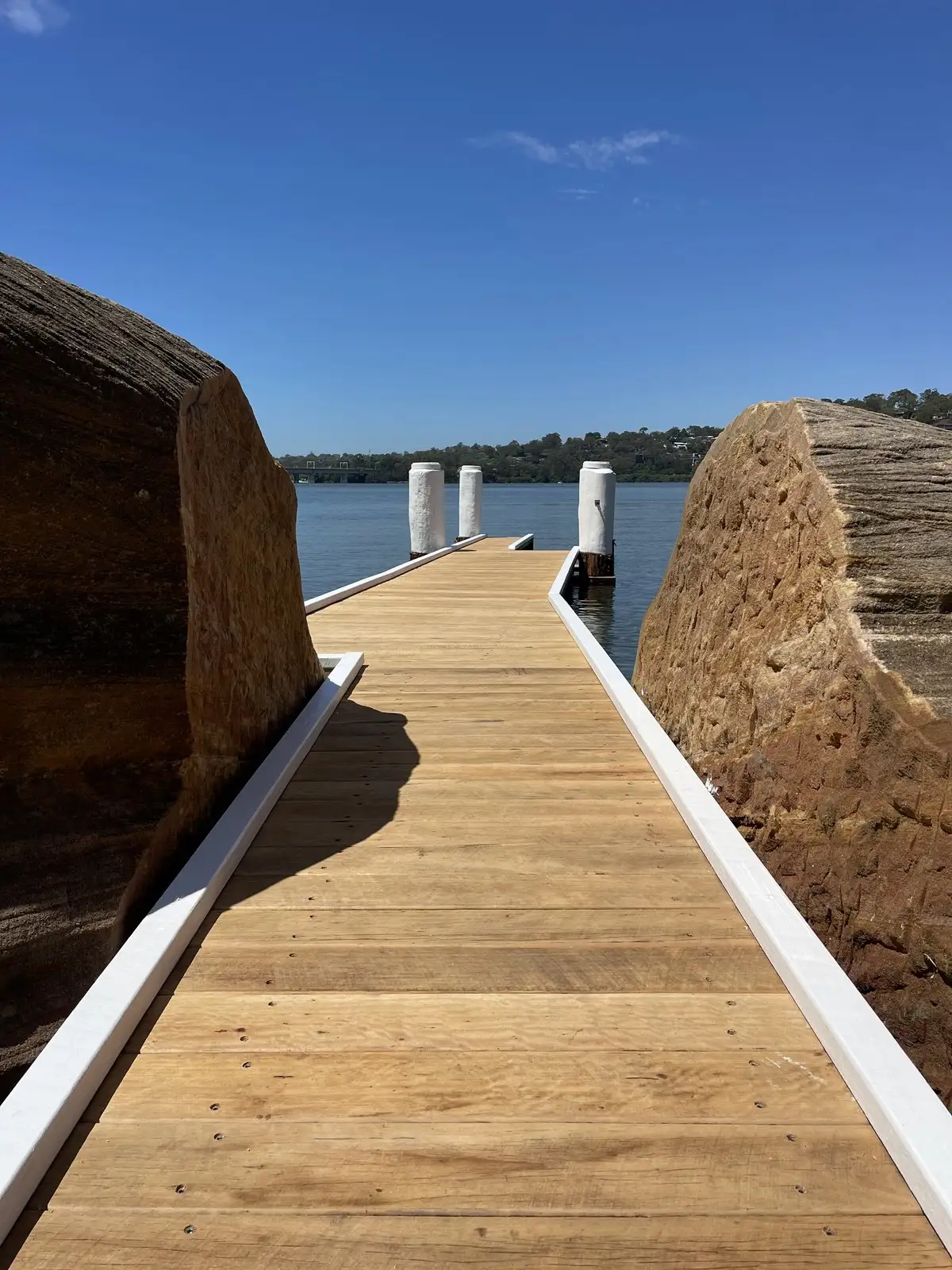
Freshly laid hardwood jetty deck running between two large sandstone boulders out to capped white piles on the river

How long a jetty takes, and how long it lasts

Replacing an existing jetty. If a structure is already there, the timing depends on our schedule. We can usually start soon after you give us the go-ahead.

Building a new jetty. A new jetty needs approval, and that takes approximately 18 months. Because a jetty sits over Crown Land, it needs both council consent and a Crown Lands licence, and there’s no way to shortcut that process. The build itself is quick by comparison.

One team, start to finish. Our in-house town planner manages the entire approval process, then hands your project straight to our construction team. You won’t need to chase consultants or coordinate trades. You deal with one company from the first sketch to the final board.

How long it lasts. A properly built jetty lasts 30 to 50 years, with the decking and fittings refreshed along the way. When a jetty fails early, it’s almost always one of two things:

  • Piles that weren’t installed to an engineered depth
  • The wrong materials, such as unsuitable timber or fixings that corrode in salt water
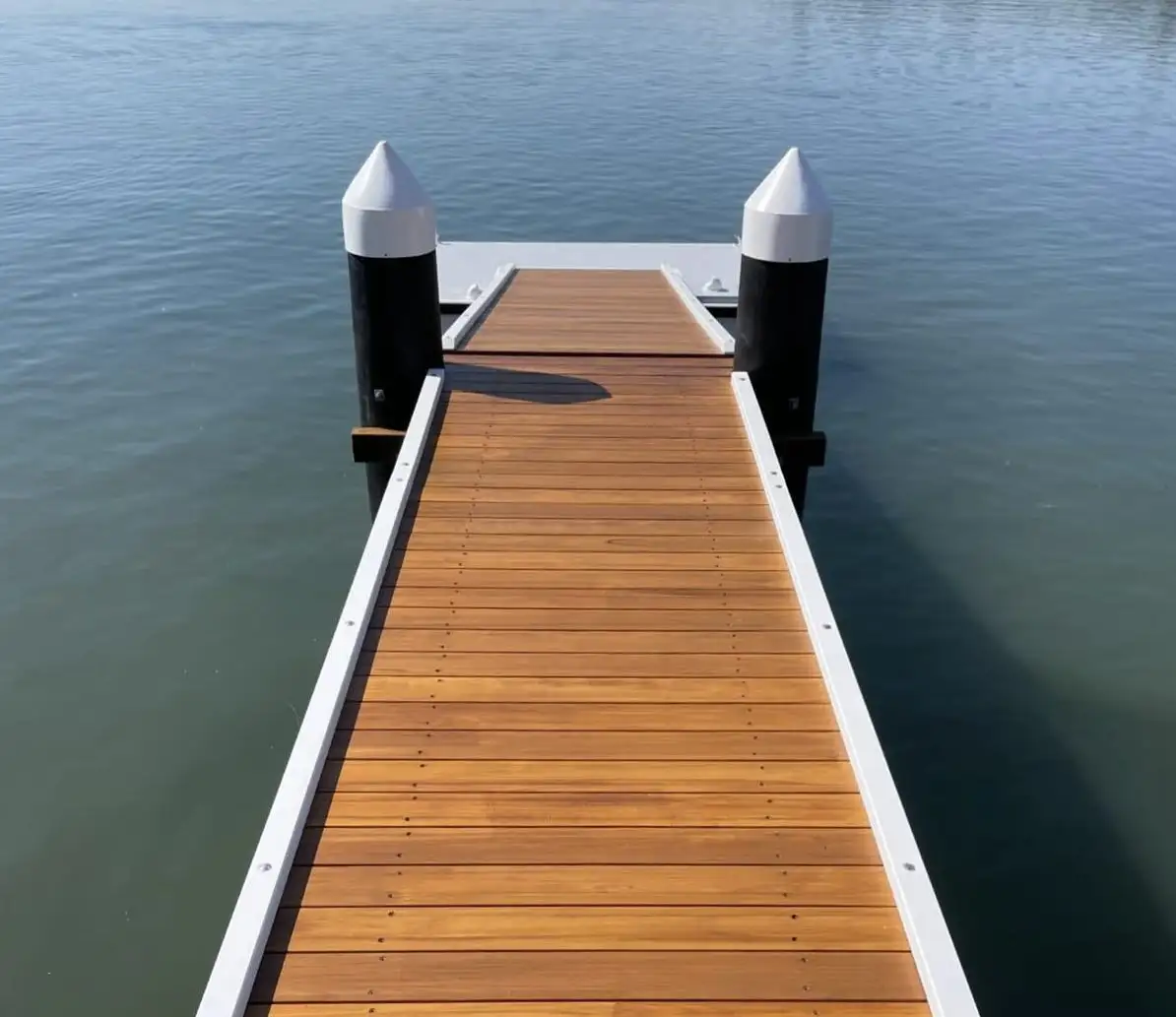
Freshly oiled hardwood jetty decking leading between two capped black mooring piles to a gangway

Frequently Asked Questions

What timber do you use for jetties?

We build with seasoned Australian hardwoods chosen for strength, durability and how they stand up to salt water.

  • Spotted Gum: Our go-to for decking. It’s hard, stable and naturally durable, and it weathers to an even silver-grey.
  • Ironbark: One of the densest, toughest hardwoods available. We use it for bearers, joists and high-wear areas.
  • Blackbutt: A lighter-toned option for decking and balustrade, with good durability above the waterline.
  • Turpentine: Where timber piles are specified, turpentine is the standard. Its natural silica content resists marine borers better than almost any other timber.

Every board is Class 1 or Class 2 durability and fixed with marine-grade stainless steel, so the fixings won’t corrode before the timber wears out.

What is an FRP jetty and why would I use one?

FRP stands for fibre reinforced polymer, which is fibreglass set in resin. An FRP jetty uses it instead of timber, usually as open-mesh grating for the deck and sometimes for the frame too. It doesn’t rot, rust or get eaten by marine borers.

When would you use it?

  • Over seagrass. Light passes through the grating to the seabed. In NSW this is often required before a jetty will be approved.
  • When you want low maintenance. It needs no oiling or sealing and won’t split or decay.
  • On exposed sites. It suits constant salt spray and swell.
  • Where slip resistance matters. The surface grips well when wet.
Why do some waterfronts get a pontoon and others do not?

It comes down to depth. You need at least 600mm of water at a zero tide before a pontoon will be approved, because anything shallower means it sits on the bottom and damages the seabed. If your frontage has the depth, the ideal setup is a jetty, a hinged ramp and a pontoon. If it does not, we build a fixed jetty or wharf structure instead. We will tell you which one your site allows when we inspect it.

Do I need council approval for a jetty in NSW?

Yes. Private jetties on NSW waterways generally need council development approval, and because they extend over public waterway, NSW Crown Lands licensing applies as well. It is a well-worn path in the Sutherland Shire and we can guide you through what your site will need.

How long does a timber jetty last?

A properly built hardwood jetty routinely serves 30 to 50 years, with decking and fittings refreshed along the way. What decides its life is pile quality and build standard. That is exactly why we drive our own piles and build heavier than we strictly have to.

Can you repair or extend an existing jetty?

Yes. We repair, re-deck, re-pile and extend existing jetties all the time. If your jetty is structurally sound we work with what is there. If it is not, we will give you an honest rebuild-versus-repair assessment backed by a proper inspection.

Simple from the start

How It Works

  1. Free site visit

    We look at depth, tide and exposure, and talk through what you want from the jetty.

  2. Design and approvals

    A jetty designed for your site, with guidance through council and Crown Lands.

  3. Build and handover

    Piles driven from our barge, hardwood frame and deck, finished to front your home.

Kingtide Marine

Why Choose Kingtide Marine

20 years of experience

Twenty years in the trade and around 100 jobs a year on the Port Hacking River, the Georges River, Sydney Harbour and the South Coast. Nobody knows these tides, beds and foreshores better.

Our own fleet of vessels

No waiting on subcontractors. We run our own fleet of operating marine vessels and do the construction ourselves.

Five-year warranty

We warrant our work for five years and come back at three to six months to check it over, tighten it up and put it right.

Reviews

What our clients say

5.0 from 16 Google reviews

  • Mick and his team delivered outstanding service and work quality in the refurbishment of our concrete jetty and slipway. Communication was excellent and the end product was of a very high standard, considering the original state of the structures. We definitely felt we received excellent value for money and will always use Kingtide for future waterfront projects.

    Stephen Smith

  • Mick, Sam and the team were fantastic to deal with from the onset. Easy to deal with and awesome workmanship. Nothing was a problem and great advice given. I highly recommend Kingtide services.

    Paul Gentile

  • Mick and his team worked with us from the day our old jetty was damaged in a storm. They made it safe and patiently waited while we planned for a new one. They kept us updated with progress, checked we were happy and we now have a beautiful new jetty. Would highly recommend them..thanks guys. Drummoyne NSW

    Jules OK

Read all our reviews on Google →

Get a free personalised quote

Tell us about your waterfront and what you're planning. We'll inspect on site and quote your jetties & wharves project for free.